Fun And Interactive hands on learning to grow Food
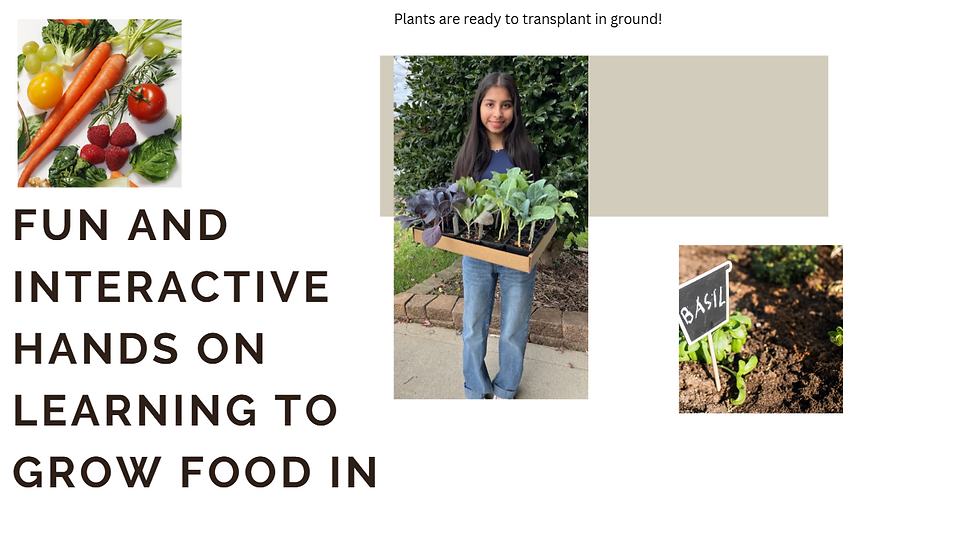
Our project has been both an enriching and transformative experience, fostering both personal and professional growth among team members while making a meaningful impact on the elementary school students and the food desert communities we served. Through our efforts in establishing an education program and hands-on gardening experiences, we have developed a deeper understanding of the food desert issue, enhanced our teamwork and communication skills, and strengthened our ability to solve real-world problems effectively.
Throughout the project, we significantly expanded our knowledge of food deserts and the challenges faced by underserved communities in accessing fresh food. Engaging with these communities increased our compassion and commitment to addressing food insecurity through education and empowerment. Additionally, we gained communication skills by adapting our teaching methods to various audiences, including young children and non-English speakers. Working collaboratively as a team, we navigated obstacles with flexibility and developed strategies to overcome logistical and scheduling challenges. These experiences ultimately strengthened our problem-solving abilities and reinforced the importance of adaptability in community-based initiatives.
Our project achieved several key milestones, demonstrating the tangible impact of our efforts. We created two programs in Charles H Parker Academy, the first of which being an elective for 3rd-5th graders, with 20 students participating. These students are learning about nutrition, health, and the importance of a balanced diet through hands-on experiences. We have also established a class for 2nd grade students, serving 50 students weekly and providing engaging, hands-on activities that teach them about the importance of a healthy food plate. Some activities include worksheets, games, and learning to garden in the school’s garden. We created the school garden, consisting of 6 gardening beds and cultivating many different kinds of vegetation. We have seen that our project receives strong support from the school’s leadership, including the principal, elective leaders, and teachers, who expressed enthusiasm for our program’s continuation.
Despite successes, we encountered several difficulties that required innovative solutions. The main challenge that we faced throughout this project was time management. Organizing activities and our time was challenging due to conflicting commitments and ideas among team members. We addressed this by using Excel for task management and maintaining effective communication via the Band app. Another challenge was scheduling conflicts regarding the school sessions. Scheduling sessions during school hours occasionally conflicted with our own academic responsibilities. To mitigate this, we implemented a sign-up system through SignUpGenius. During our school sessions, we noticed that some students had little background in planting vegetables or understanding nutrition. We were able to solve this by explaining concepts in detail and ensuring understanding through creative and attractive class activities such as worksheets and games. In addition, some children did not speak English fluently. We adapted by incorporating hands-on learning experiences, enabling all students to actively participate and understand through practice rather than language alone.
Beyond providing immediate education, our project emphasized food sovereignty by equipping children with the knowledge and skills necessary for self-sustaining food production, a pillar of food sovereignty. By making learning fun and interactive in this way, we empowered students to incorporate healthy eating habits into their daily lives. The hands-on experiences such as planting and maintaining gardens allowed them to build confidence in their ability to grow their own food. These experiences not only reinforced the importance of nutrition but also fostered a sense of ownership and responsibility toward sustainable food practices.
In conclusion, this project has been a rewarding journey of growth, impact, and problem-solving. By establishing a strong foundation for nutrition education in the school, we contributed to fostering healthier habits among young students while gaining valuable experience in leadership, teamwork, and community engagement. The enthusiasm and support from the school community further reinforce the significance of our efforts, inspiring us to continue expanding our programs into other schools in the future.


To assess the effectiveness of our approach, we used an evaluation process which included pre- and post-project surveys to measure changes in students’ knowledge and attitudes, direct observations of student engagement, and feedback from teachers and Master Gardeners involved in the project. Our approach allowed for an analysis of how well the activities achieved the desired impact on the students and their community.
Our survey data revealed massive improvements in students’ understanding of food security and sustainability as many students expressed newfound confidence in food preparation and gardening. Students demonstrated an increased interest in continuing to grow their own food at home, showing the project’s influence. Additionally, teachers reported a noticeable shift in students’ attitudes toward nutrition, with many becoming more knowledgeable about making healthier food choices.


Comments